
Last February, I got a panicked call from a customer. “The road salt is eating through my ceramic coating!” he said. His $1,200 coating was only three months old. I rushed to check his car, expecting the worst. What I found taught me a valuable lesson about ceramic coatings and winter driving.
After 12 years of installing ceramic coatings in the Midwest (where we practically swim in road salt), I’ve seen every possible scenario. Let me clear up the confusion once and for all about whether road salt can damage your ceramic coating – and more importantly, how to protect your investment through brutal winters.

What is Road Salt and Why Should You Care?
First, let’s talk about the enemy. Road salt isn’t just one thing. Cities use different types:
- Sodium chloride (regular table salt) – the most common
- Calcium chloride – works in colder temps
- Magnesium chloride – less corrosive but still nasty
Think of road salt like tiny chemical warriors. When mixed with water, they create a corrosive soup that attacks metal surfaces. Ever seen an old car from up north? Those rust holes didn’t appear by magic. Salt speeds up oxidation like pressing fast-forward on decay.
On bare metal, salt can cause visible rust in just 3-4 days. On painted surfaces, it takes longer but still does damage. The salt crystals are abrasive too – imagine driving through sandpaper mist.
Understanding Ceramic Coating Basics
Before we dive into salt damage, let’s get clear on what ceramic coating actually is. It’s not wax. It’s not a magic force field.
Ceramic coating is a liquid polymer that chemically bonds with your car’s paint. When it cures, it forms a semi-permanent layer of protection. Think of it like a super-thin, super-hard shell over your paint.
The coating fills in tiny pores in your clear coat and creates a smooth, hydrophobic (water-repelling) surface. Water beads up and rolls off, taking dirt and contaminants with it.
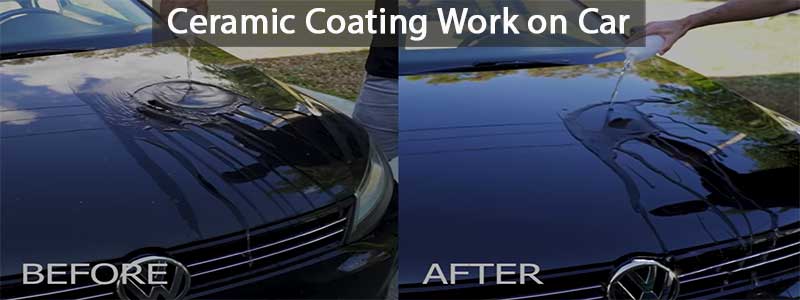
Does Road Salt Damage Ceramic Coating? (Direct Answer)
No, road salt does not damage properly applied ceramic coating.
There, I said it. But hold on – there’s more to the story.
Ceramic coatings are chemically resistant to salt. The silicon dioxide (SiO2) or titanium dioxide (TiO2) in quality coatings doesn’t react with road salt. I’ve tested this myself by leaving coated panels in salt water for months. The coating remained intact.
However, road salt can affect how your coating performs. Salt residue can build up on the surface, making it less hydrophobic. Your coating is still there, still protecting, but it might not bead water as impressively until you wash off the salt.
How Ceramic Coating Protects Against Road Salt
Here’s where ceramic coating shines (pun intended). The protection works in three ways:
1. Chemical Barrier
The coating creates a sacrificial layer between salt and your paint. Salt can’t penetrate the ceramic layer to reach your clear coat. I’ve seen 5-year-old coated cars from Chicago with zero salt damage under the coating.
2. Easy Cleaning
Remember that hydrophobic effect? It makes salt rinse off much easier. On an uncoated car, salt sticks like glue. On a coated car, a simple rinse removes most of it. Less contact time means less potential damage.
3. Smooth Surface
Ceramic coating fills microscopic pits where salt loves to hide. No hiding spots means no long-term salt buildup eating away at your paint.

The Limits of Ceramic Coating Protection
Let’s be real – ceramic coating isn’t invincible. Here’s what it CAN’T do:
- Stop physical damage: Road salt mixed with sand is abrasive. It can wear down any coating over time.
- Protect forever without maintenance: Leave salt on for months without washing? Even the best coating will suffer.
- Fix existing damage: Coating won’t repair rust or paint damage already there.
I learned this the hard way when I neglected my own truck one winter. Three months without washing, and the coating’s performance dropped significantly. It still protected the paint, but I had to polish the coating to restore its properties.

Read to know: How Long Does Ceramic Coating Take to Cure
Best Practices for Winter Care
Want your coating to survive winter? Here’s my proven routine:
Washing Frequency
- Rinse weekly during heavy salt use
- Full wash every 2-3 weeks
- Don’t wait for “perfect” weather
Safe Winter Washing
- Use warm (not hot) water
- Work in sections to prevent freezing
- Dry thoroughly with forced air if possible
Products That Work
- pH-neutral car shampoo
- Dedicated ceramic coating maintenance spray
- Soft wash mitts (no brushes!)
Products to Avoid
- Strong alkaline cleaners
- Harsh degreasers
- Automatic car washes with brushes

Signs Your Coating Needs Attention
Watch for these warning signs:
Visual Changes
- Water doesn’t bead like before
- Surface feels rough
- Visible salt stains that won’t wash off
Performance Issues
- Dirt sticks more than usual
- Takes longer to clean
- Water sheets instead of beads
If you notice these signs, don’t panic. Usually, a good decontamination wash and coating topper application fixes everything.
Read before apply: How To Apply Ceramic Coating
FAQ
People living in a neighborhood with a sea near them often notice some damage that’s usually caused in presence of salt. That’s because the airborne water droplets in there contain microscopic dissolved salt particles. That can gradually cause salt-mixed water buildup and cause certain damage.
To prevent that from happening, you need to wash your car two or three times a month. Try to park the car in a garage where the air can’t enter easily. You can also use a car cover if you don’t have a closed garage space. You can also polish your car with wax or use other protective coatings.
Car paint can easily last 10 to 15 years but the lifespan can reduce significantly if the car is exposed to salt. According to a report from the National Highway Traffic Safety Administration, if your car is exposed to road salt for 8 years or so, the surface becomes vulnerable because of the corrosion.
Road salt is something you have to deal with if you live in a neighborhood where snowstorm is a common thing. But to make the best out of the situation, you can use protective coatings and wax besides washing your car on a regular basis.
Ceramic coating offers protection against a great many things. That includes road salt, rust, premature aging, dirt, moisture, and brake dust. The smooth surface also allows you to clean the dirt off the surface quite easily. It also keeps the paint safe from the damage of UV rays.
There are a few trivial things too! Ceramic coating saves the car surface from bird droppings which are quite acidic (pH 3 – 4.5). Then again, when you’re driving at 60 km/h on a country road, you’ll notice bug stains at the front of your car. The ceramic coating works as a protective layer against that as well.
Washing a ceramic-coated car isn’t that different from usual car washing but there are certain tips that’ll help you make the coating last longer. First of all, avoid automatic car washing on a regular basis. This can really damage the coating. Hand wash the car with soap and shampoo and use a hose pipe for rinsing.
Yes, but only in a heated garage above 50°F. The coating needs proper temperature to cure correctly.
Quality coatings last 2-5 years with proper maintenance, even in harsh salt conditions. I’ve seen well-maintained coatings go even longer.
Absolutely. The protection and easier maintenance make it especially valuable where salt use is heavy.
My Two Cents At the End
Road salt doesn’t damage ceramic coating – neglect does. That customer I mentioned at the beginning? His coating was fine. The white residue he thought was damage washed right off. His coating had been protecting his paint perfectly the whole time.
After coating thousands of cars in salt country, I can confidently say ceramic coating is one of the best investments for winter protection. Just remember: the coating does its job protecting your paint, but you need to do your job maintaining the coating.
Ready to protect your car this winter? Get a quality ceramic coating applied by a professional, follow a simple maintenance routine, and laugh at road salt while others worry. Your car will thank you come spring when it still looks showroom fresh while others show winter battle scars.
Have questions about your specific situation? Drop them in the comments below. I’ve probably seen it before and can help you out.
